Introduction
Building an evening regimen requires more than picking the right bottles off your shelf. Knowing how to arrange each step helps organize your routine. Applying products out of order can make layering less comfortable and lead to wasted product.
Your skin faces different demands across a 24-hour cycle. While daytime routines center on broad-spectrum sunscreen and antioxidant serums, evening regimens prioritize thorough cleansing, hydration, and targeted support. Structuring your night skincare routine order helps organize humectants, peptides, and creams without unnecessary friction. A skincare quiz can help organize a routine around your preferences.
Key Takeaway: The fundamental rule of product layering is simple: apply formulas from thinnest to thickest texture so lighter, water-based solutions absorb before richer emollient creams rest on top.
Why Product Order Matters at Night
Every skincare formulation possesses a specific vehicle, weight, and viscosity. Water-based liquids, watery toners, and thin serums move quickly into the surface layers. Rich creams, balms, and face oils contain dense lipid networks that remain on the surface longer.
If you apply a thick moisturizing cream first and attempt to pat a thin hydrating serum over it, layering may feel less comfortable and the serum may sit on the surface.
Transepidermal water loss (TEWL), the water that evaporates from the skin's surface, naturally increases during the evening hours. Applying moisturizer as the final step helps reduce moisture loss while you sleep.


Step-by-Step Evening Skincare Order
Establishing a clear routine takes the guesswork out of your evening. Here is the standard progression from initial cleanse to final moisturizer.
1. The First Cleanse (Makeup and SPF Removal)
Throughout the day, your skin collects airborne particles, sebum, cosmetics, and water-resistant sunscreen filters. A single mild wash may leave residue behind. Starting with an oil-based cleansing balm, oil cleanser, or gentle micellar water dissolves stubborn surface oils without aggressive scrubbing. Massage the product onto dry skin, emulsify with warm water, and rinse thoroughly.
2. The Second Cleanse (Water-Based Wash)
Follow immediately with a gentle water-based foaming or gel cleanser. This step sweeps away remaining impurities, sweat, and residual oil from the first wash. Choose a formula with a skin-friendly, neutral pH to avoid stripping surface lipids. Pat your face dry with a clean cotton towel, leaving the skin slightly damp.
3. Exfoliating Acids or Balancing Toners
If you use liquid exfoliants, such as alpha hydroxy acids (AHAs) or beta hydroxy acids (BHAs), apply them directly after cleansing on dry skin. These formulas loosen surface dead cells, helping to improve the look of uneven texture. Because chemical exfoliants can cause sensitivity if overused, limit this step to two or three evenings per week rather than daily. On alternate nights, a hydrating toner can be patted gently over the face to prepare the skin for serums.
4. Hydrating Serums and Water-Based Treatments
Once liquid toners have settled, move directly to your lightweight, water-based serums. This stage is ideal for humectants like hyaluronic acid. In topical skincare, sodium hyaluronate is the sodium salt of hyaluronic acid, which helps attract, bind, and retain water in the outer layers of the skin.
Pat these lightweight liquids over the face and neck. Other water-soluble ingredients, such as hydrating formulas or gentle clarifying drops, belong here.
5. Targeted Active Serums and Peptides
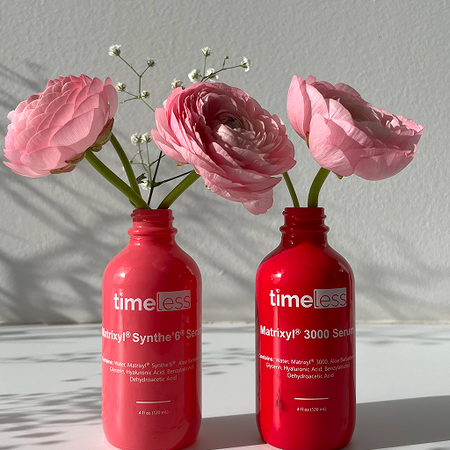
After your base hydration step, layer slightly more concentrated treatment serums. A peptide serum option is Matrixyl Synthe'6 Serum. This stage includes targeted peptides. They may help support the appearance of firmness.
If your routine includes a specialized active like a retinoid, apply it during this treatment stage. Retinoids are often used in evening regimens because many forms degrade under direct sunlight.
6. Eye Treatments
The skin surrounding the orbital bone is thinner than the rest of the face. The orbital area is often addressed with a dedicated eye cream. A product in this category is Dark Circle Peptide Complex Eye Cream.
7. Night Creams and Barrier Moisturizers
Night cream is typically the final moisturizing step. A quality moisturizer helps reduce transepidermal water loss (TEWL). Whether you prefer a light gel-cream or a dense restorative balm, smooth it evenly across your face, neck, and décolletage.
8. Face Oils (Optional)
If your skin feels dry, flaky, or exposed to arid indoor heating, a facial oil can serve as the final step. Oils are generally used after water-based moisturizers. Warm two to three drops between your palms and gently press them over your cheeks and forehead.
Keep this sequence in mind:
- Double cleanse away the day.
- Apply liquid treatments.
- Layer water-based hydration.
- Apply a barrier moisturizer.
Active Ingredients to Rotate in Your Night Routine
Not every active ingredient belongs in a single evening session. Combining too many potent ingredients at once can lead to visible redness and irritation. Planning an intentional rotation ensures balance.
| Ingredient Category | Primary Evening Role | Ideal Layering Position | Frequency |
|---|---|---|---|
| Exfoliating Acids (AHA/BHA) | Helps improve the look of uneven texture | Immediately after cleansing | 2 to 3 nights weekly |
| Retinoids | Helps improve the appearance of texture and fine lines | Treatment serum step (before cream) | 2 to 5 nights weekly |
| Peptides | May help support the appearance of firmness | After hydrators, before moisturizer | Nightly or as preferred |
| Humectants (Hyaluronic Acid) | helps support hydration in the upper layers of the epidermis | Damp skin after cleansing or toning | Nightly |
| Antioxidants (CoQ10) | provides antioxidant support as the skin's natural CoQ10 levels decline with age | Serum stage | Generally once daily |
A peptide serum option is Matrixyl® 3000 Serum. Another serum option is Coenzyme Q10 Serum. If you have vitiligo, check with your dermatologist before using a CoQ10 product.
Quick Answer: Can you layer peptides with retinoids? Yes. Peptides may be used in the same evening regimen as retinoids if your skin tolerates both without sensitivity.
Morning vs. Evening Skincare: Key Differences
While both routines share basic cleansing and hydrating principles, their primary objectives differ. For more guidance on product layering, see how to layer multiple serums.
Daytime Objective: Protection
In the morning, your skin prepares to face ultraviolet rays, visible light, and airborne pollutants. A routine centered on daytime defense includes:
- A gentle, single cleanse.
- An antioxidant serum, such as vitamin C, which helps defend against oxidative stress caused by environmental factors such as UV exposure and pollution. It also helps brighten the look of dullness and uneven tone.
- A light daytime lotion.
- A broad-spectrum sunscreen rated SPF 30 or higher. Daily broad-spectrum sunscreen use is essential to protect against premature aging and UV-induced skin changes.
Nighttime Objective: Renewal and Hydration
At night, there is no need for sun protection filters. You can use richer textures that might feel too heavy under makeup during the day. Night is also the ideal window to use photosensitive actives like retinoids and resurfacing acids that should not be exposed to immediate sunlight.
Customizing Your Order for Different Skin Concerns
Every complexion responds uniquely to product textures. Adjusting your evening layering sequence helps you target specific concerns without overwhelming your skin barrier.
Dry and Dehydrated Skin
Dry skin lacks natural lipids, while dehydrated skin lacks water. If your skin feels tight or shows dehydration lines:
- Cleanse with a non-foaming cream or balm cleanser.
- Apply a humectant serum directly to damp skin. Hyaluronic acid helps improve the appearance of dehydration lines.
- Layer a nourishing, lipid-rich moisturizer immediately over the serum. It helps reduce moisture loss.
- Press two drops of squalane or argan oil on top.
Oily and Blemish-Prone Skin
Oily complexions can also benefit from adequate hydration.
- Double cleanse thoroughly to remove daytime sunscreen and excess sebum.
- Use a gentle BHA liquid two evenings per week to help improve the appearance of uneven texture.
- Apply a light, water-based hydrating serum.
- Finish with an oil-free, non-comedogenic gel-cream that feels light.
Sensitive Skin
When managing easily irritated skin, simplicity is key. Avoid layering multiple strong actives on the same night.
- Wash with a mild, fragrance-free cleanser.
- Apply a barrier-supportive hydrating serum. Formulations with vitamin B5 (calcium pantothenate) support the skin barrier and help the skin retain moisture. Vitamin B5 helps the skin feel more comfortable.
- Apply a ceramide-rich cream.
- Skip exfoliants and strong retinoids if your barrier feels irritated.
Realistic Expectations
Skincare requires patience and consistency. A well-formulated hydrating serum may make skin look dewy and improve the appearance of surface dryness. Visible changes in skin smoothness, firmness, and the appearance of fine lines can vary with regular application.
Individual reactions vary widely based on genetics, climate, formulation stability, and routine consistency. If you experience unexpected redness, tightness, or peeling, scale back the frequency of your active serums and focus on simple barrier hydration. Anyone with a known sensitivity or diagnosed skin condition should check with their dermatologist before introducing new active formulas.
Frequently Asked Questions
How long should I wait between skincare steps at night?
Most water-based serums and moisturizers can be applied one right after the other without long pauses. Wait briefly for each layer to settle so your products do not pill on the surface. If you are applying strong exfoliating acids or a prescription retinoid, letting your skin dry completely before applying your next layer may help reduce the potential for irritation.
Should I apply facial oils before or after my night cream?
Facial oils should almost always be applied after your water-based night cream or mixed directly into it. Oils are generally used as a final layer over water-based products. Applying an oil before your moisturizer may make layering less comfortable.
Is it necessary to double cleanse if I did not wear makeup?
Double cleansing is particularly helpful if you wore water-resistant broad-spectrum sunscreen, worked out, or spent extended time in an urban environment with heavy pollution. The initial oil-based wash helps remove stubborn sunscreen filters and environmental grime that water alone may not remove as effectively. However, if you spent a quiet day indoors without sunscreen or makeup, a single wash with a gentle water-based cleanser is sufficient.
Can I use vitamin C in my nighttime skincare routine?
Morning use is the most common recommendation, paired with broad-spectrum sunscreen, because vitamin C helps defend against oxidative stress caused by environmental factors such as UV exposure and pollution. A vitamin C formulation used in the evening helps brighten the look of dullness and uneven tone. If you choose to use it at night, avoid pairing it directly in the same session with strong exfoliating acids or high-strength retinoids if your skin is prone to sensitivity.