Introduction
Your evening skincare routine serves a different purpose than your morning regimen. During the day, your focus is primarily on daily broad-spectrum sunscreen and environmental defense. At night, the goal shifts toward thorough cleansing, hydration, and targeted cosmetic ingredients that support the skin while you rest.
Layering these products in the right sequence helps organize application. If you apply a dense, occlusive cream first, lightweight serums may sit on top without reaching the skin. Following a structured order of skincare at night helps you get the most out of every bottle on your shelf.
Founded in 2009 by Veronica Pedersen, Timeless Skin Care focuses on clean, simple formulations designed to support healthy skin over time. True to the belief that "Healthy Skin Is Timeless," building a sensible evening routine does not require an endless array of steps. Understanding how formulations interact will help you assemble an evening routine.
Quick Answer: Apply your evening products from thinnest consistency to thickest consistency. Cleanse your skin first, apply water-based serums or toners next, dab on optional eye creams, and finish with a nourishing moisturizer.
The Core Rule of Evening Layering: Thinnest to Thickest
The most reliable guideline for any skincare routine is to work from the thinnest texture to the thickest texture. Water-based liquids have smaller molecular weights and absorb quickly. Heavier creams and face oils contain larger lipid components designed to remain on the surface.
If you apply a thick product before a lightweight liquid, the heavier layer acts as a physical barrier. Water-based ingredients may not move through dense oils or rich waxes as easily. Applying your steps out of order may waste product and contribute to pilling or surface congestion.
The table below outlines how common product categories fall along the texture spectrum.
| Routine Phase | Product Type | Texture & Base | Primary Cosmetic Function |
|---|---|---|---|
| Step 1 | Oil Cleanser / Micellar Water | Oil or Micellar liquid | Removes makeup, sunscreen, and surface debris |
| Step 2 | Water-Based Cleanser | Gel, foam, or cream | Cleanses skin surface thoroughly |
| Step 3 | Hydrating Toner or Essence | Watery liquid | Preps skin and softens the surface |
| Step 4 | Active or Hydrating Serums | Lightweight fluid or gel | Delivers targeted cosmetic ingredients |
| Step 5 | Eye Cream | Light emulsion or cream | Targets the delicate skin around the orbital bone |
| Step 6 | Night Moisturizer | Cream, lotion, or balm | Helps reduce moisture loss overnight |
| Step 7 | Facial Oil (Optional) | Lipid oil | Provides an occlusive finish for dry skin types |


Step-by-Step Evening Skincare Sequence
A complete evening routine can range from three basic steps to a more comprehensive multi-layer approach. Tailor the steps below to match your specific skin needs and time preferences.
1. First Cleanse (Makeup and Sunscreen Removal)
The first step of your night routine removes the buildup of the day. Sunscreen filters, long-wear makeup, and daily environmental grime are oil-soluble. An oil-based cleanser, cleansing balm, or micellar water breaks down these residues without requiring aggressive scrubbing.
Apply an oil-based cleanser to dry skin and massage gently in circular motions. Add lukewarm water to emulsify the formula, then rinse thoroughly. If you wear minimal makeup or non-waterproof formulas, a single thorough cleanse may be sufficient.
2. Second Cleanse (Water-Based Wash)
Following your makeup removal with a gentle water-based cleanser ensures that your skin is completely clean. This second step lifts away sweat, remaining impurities, and any leftover cleansing residue.
Choose a gentle foaming gel or hydrating cream cleanser based on your skin type. Massage the cleanser over wet skin for thirty to sixty seconds, then rinse with lukewarm water. Pat your face gently with a clean towel, leaving the skin slightly damp for the next step.
3. Hydrating Toners or Essences (Optional)
Toners and essences are optional prep steps that add a light layer of hydration right after cleansing. Modern toners are designed to rehydrate rather than strip the skin with harsh alcohols.
Applying a hydrating toner to damp skin softens the surface and primes it for concentrated treatments. You can pat a few drops directly into your skin with your hands or swipe gently using a cotton round.
4. Target Serums (Water-Based Treatments)
Serums are lightweight, fast-absorbing liquids formulated with specific ingredients for visible cosmetic results. When using multiple serums, apply the thinnest, most watery consistency first, followed by slightly more viscous gels.
- Hydrating Serums: Hyaluronic acid helps attract, bind, and retain water in the outer layers of the skin. It helps support hydration in the upper layers of the epidermis. It helps improve the appearance of dehydration lines. Hyaluronic acid is a humectant, not a moisturizer. A hyaluronic acid serum in the Timeless Skin Care catalog is Hyaluronic Acid 100% Pure.
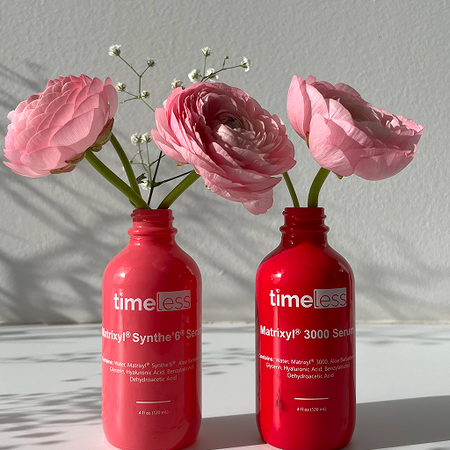
- Peptide Serums: Peptides may help support the appearance of firmness. A peptide serum in the Timeless Skin Care catalog is Matrixyl® 3000 Serum.
- Exfoliating Treatments: Chemical exfoliants such as alpha hydroxy acids (AHAs) or beta hydroxy acids (BHAs) help remove dead surface skin cells to reveal a smoother look. Limit chemical exfoliants to two or three nights per week to avoid overworking the skin.
Key Takeaway: Give each serum thirty to sixty seconds to absorb into the skin before applying the next layer. You do not need a long waiting period, but allowing the liquid to settle may help prevent product pilling.
5. Eye Cream (Optional)
The skin surrounding the eyes is thinner and more delicate than the rest of the face. An eye cream provides targeted moisture to this sensitive area. For the eye cream category, Timeless Skin Care offers Dark Circle Peptide Complex Eye Cream.
Use your ring finger to gently tap a pea-sized amount along the orbital bone. Avoid pulling or tugging the skin, and keep the product away from the immediate lash line to prevent irritation.
6. Nighttime Moisturizer
Moisturizer can be a useful step in an evening routine. A quality night cream helps reduce transepidermal water loss (TEWL). It also helps reduce moisture loss while you sleep.
Smooth a nickel-sized amount of moisturizer over your face and neck using gentle, upward strokes. Look for formulas containing ceramides, fatty acids, or squalane to support the skin barrier and maintain surface comfort.
7. Facial Oils (Optional Finishing Step)
If you have very dry skin or live in an arid climate, a facial oil can serve as a final protective layer. Because facial oils are fully lipid-based, they generally go on last. Applying an oil under a water-based moisturizer may interfere with the moisturizer's application.
Warm two to three drops of face oil between your palms and gently press them onto your cheeks, forehead, and chin over your night cream.
- Cleanser.
- Toner or essence, optional.
- Targeted serums.
- Eye cream, optional.
- Moisturizer.
- Facial oil, optional.
Navigating Evening Active Ingredients Safely
Building an effective evening routine requires balance. Layering too many potent active ingredients in a single night can cause visible redness, peeling, or discomfort.
Understanding Ingredient Compatibility
Certain ingredients work well together, while others are best used on alternate evenings. The ingredient glossary provides additional information about skincare ingredients.
- Hydration with Anything: Humectants like hyaluronic acid and barrier-supportive ingredients can be used with retinoids, exfoliating acids, and peptides.
- Retinoids and Chemical Exfoliants: Avoid using strong exfoliating acids, such as glycolic or salicylic acid, in the same routine as a retinoid. Alternate these products on different nights to maintain skin comfort.
- Antioxidants: CoQ10 provides antioxidant support as the skin's natural CoQ10 levels decline with age. It helps improve the appearance of fine lines and supports firmer-looking skin. If you have vitiligo, check with your dermatologist before using a CoQ10 product.
Individual reactions vary, and anyone with a known sensitivity or diagnosed skin condition should check with their dermatologist before introducing new active formulas.
Common Evening Layering Mistakes
- Applying Serums to Completely Dry Skin: Humectants work best when there is surface moisture to hold onto. Applying water-based serums to slightly damp skin may help optimize hydration.
- Over-Exfoliating: Using physical scrubs and chemical acids daily can disrupt the skin barrier. Limit exfoliation to a few times a week.
- Skipping Moisturizer on Oily Skin: Skin can lose hydration overnight. Oily skin may benefit from lightweight, oil-free gel creams that help reduce moisture loss without feeling heavy.
Note: If your skin ever feels tight, sensitized, or uncomfortable, strip your evening routine back to a simple gentle cleanser and a basic moisturizer for several days.
Managing Realistic Expectations for Your Evening Routine
Skincare is a long-term commitment rather than an overnight fix. While a hydrating evening routine can make your skin look more refreshed by the morning, visible cosmetic improvements take time and consistency.
Visible changes in skin texture, firmness, and tone can develop gradually as you maintain a regular routine. Follow a consistent evening regimen before evaluating the visible results of your serums and treatments.
Consistency, gentle handling, and proper product order may support better long-term results than rushing the process with too many harsh products at once.
Frequently Asked Questions
Can I use the same moisturizer for day and night?
Yes, you can use the same moisturizer for both morning and evening, provided it does not contain sunscreen filters. Day moisturizers with SPF should only be used in the morning. If you use a standalone daytime sunscreen, a standard, non-SPF moisturizer works well for both routines.
Should I apply eye cream before or after my facial moisturizer?
Apply your eye cream before your facial moisturizer if the eye cream has a lighter, more fluid texture. If your eye cream is richer and heavier than your face lotion, apply it after. Following the thinnest-to-thickest rule helps organize application for both products.
How long should I wait between skincare steps at night?
You do not need to wait several minutes between every step. Waiting thirty to sixty seconds allows each layer to settle and may help prevent pilling. If you are applying a product with specific wait instructions, follow the label directions, but general serums can be applied in steady succession.
Is a morning routine necessary if I complete a full night routine?
Yes, a morning routine remains necessary, primarily to apply broad-spectrum sunscreen. While nighttime focuses on hydration and cosmetic care, morning care focuses on defense. Broad-spectrum daily sunscreen is essential to protect the skin from UV exposure throughout the day.